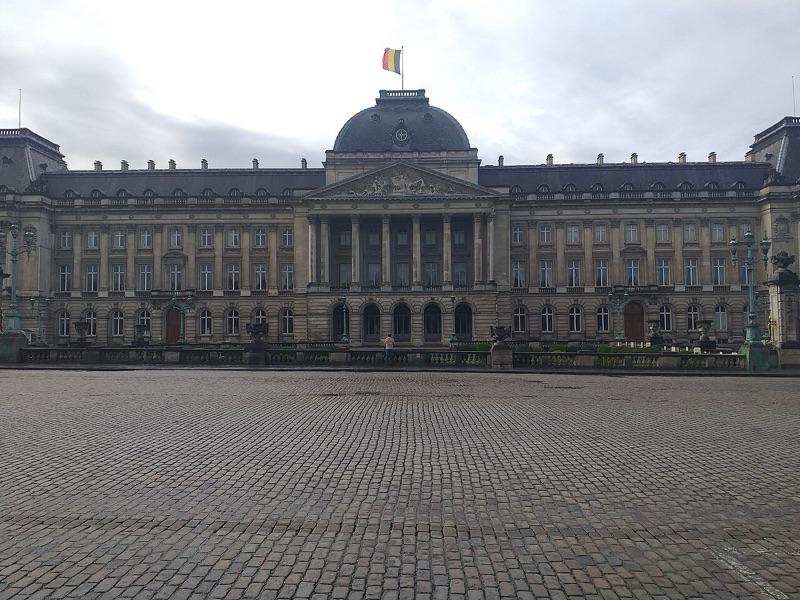
Photo: Daniel Huet / Wikimedia Commons (CC0)
Brussels, Belgium
The Royal Palace of Brussels
The Royal Palace of Brussels is one of the grandest buildings in the Belgian capital, but it is not where the royal family lives. The palace is King Philippe's place of work. Here he carries out his duties as head of state, receives guests in audience and holds receptions and state banquets. The royal family lives at the Castle of Laeken in the north of Brussels.
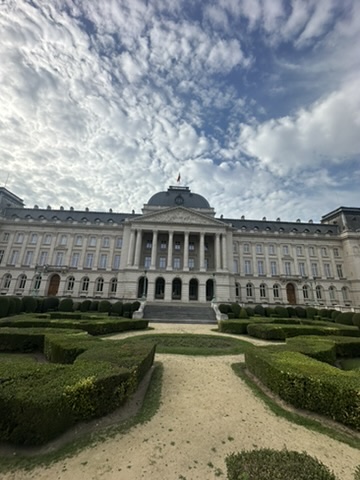
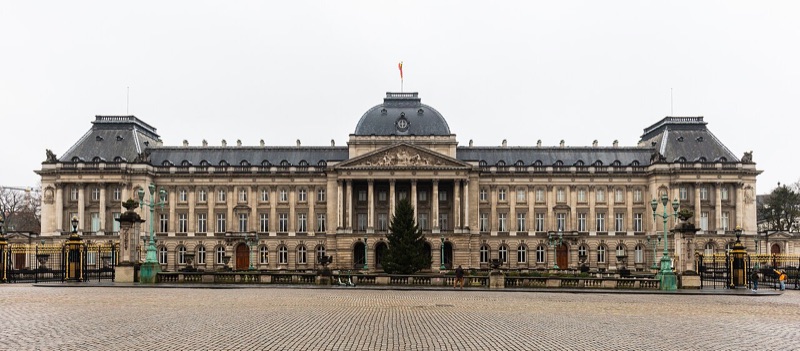
The palace stands on the Place des Palais, with Brussels Park directly opposite. On the far side of the park is the Palace of the Nation, home of the Belgian parliament. The placement is no accident: the King and the elected representatives face each other across the park.
A palace that burned down
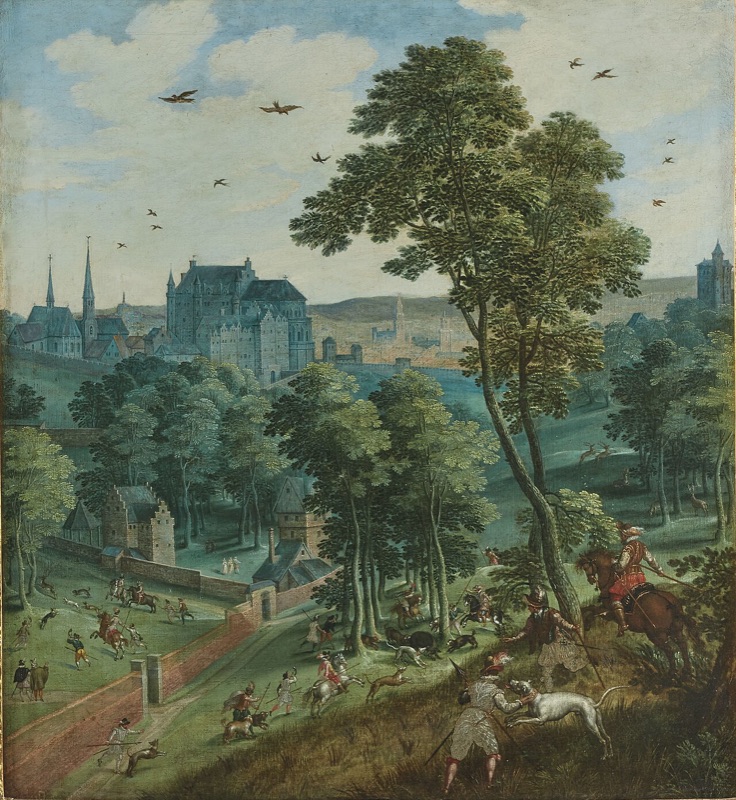
On the Coudenberg hill, where the palace stands today, there was a princely palace going all the way back to the Middle Ages. It was here that Emperor Charles V abdicated in 1555, one of the best known events in Belgian history. The palace burned down in 1731, and the ruins were cleared away after 1775.
The oldest part of today's building dates from the end of the 18th century. The facade as we see it now only came after 1904, designed by the architect Henri Maquet. It replaced an earlier facade by Tilman-François Suys. King Leopold II was behind it: between 1868 and 1909 he nearly doubled the size of the palace.
Inside the doors
The grand staircase in white marble was designed by Alphonse Balat, Leopold II's court architect, and is the first thing visitors meet. Further in lie the Empire Room, the Throne Room and the Large Gallery, which is over 40 metres long.
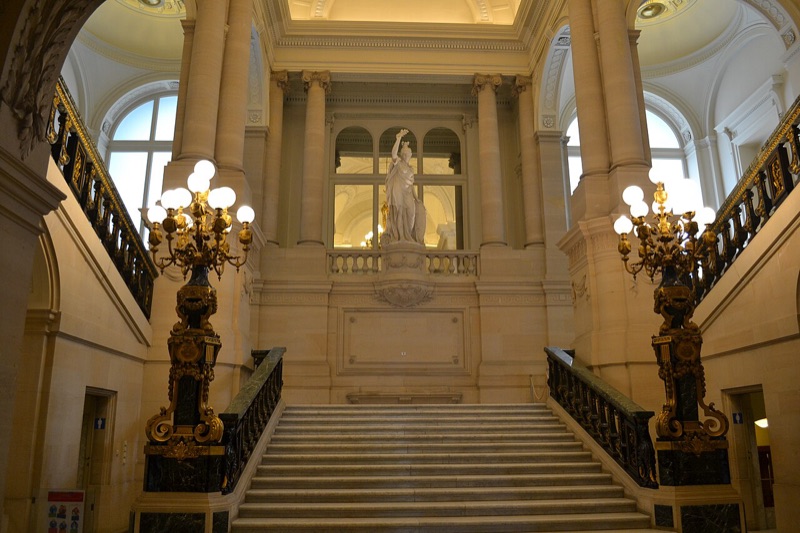
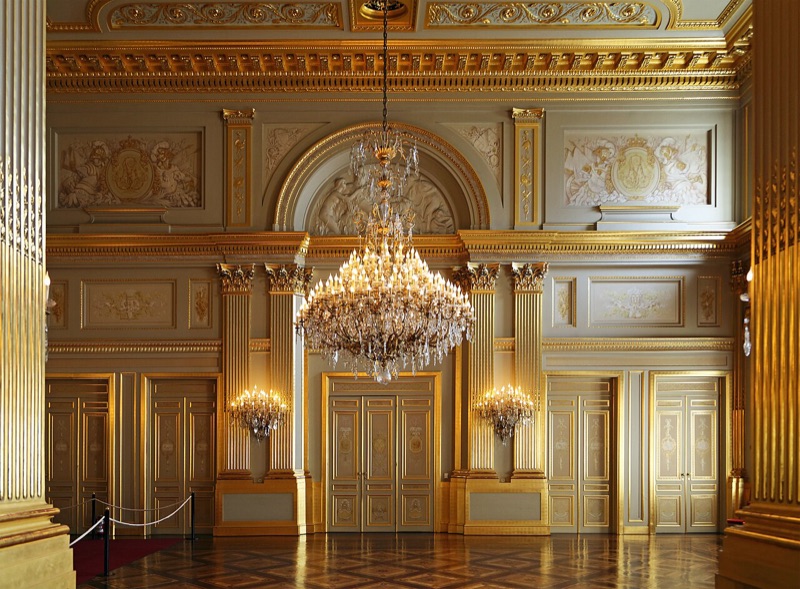
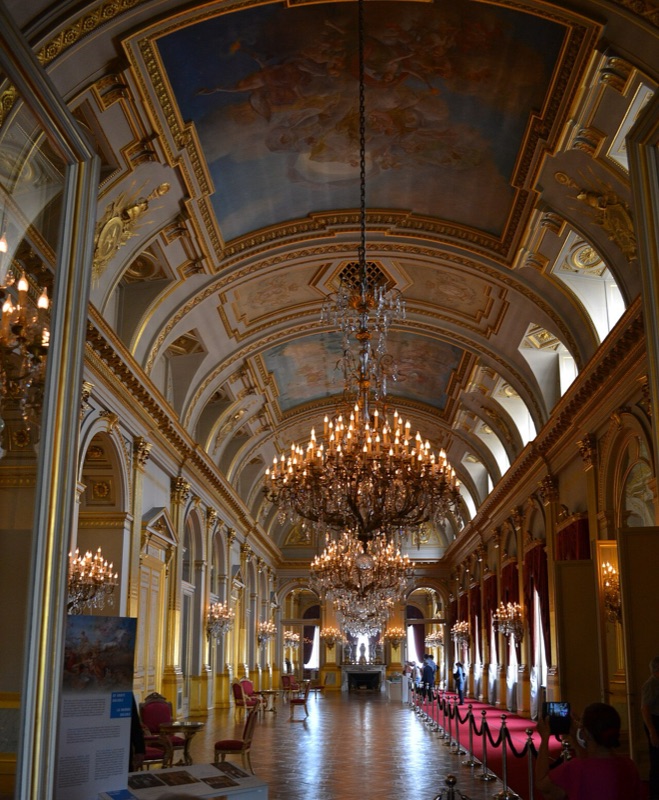
The palace also holds tapestries after Francisco Goya, a gift from Queen Isabella II of Spain. Tapestries are heavy woven wall hangings with detailed patterns, colours and figures.
A ceiling of beetle wings
The most unexpected room is the Mirror Room. Work on it began under Leopold II, and the walls were meant to carry images evoking the Congo. That is not how it turned out. King Albert I had the room finished with mirrors instead.
In 2002 the Belgian artist Jan Fabre was invited to create a work in the room. He covered the ceiling and one of the three chandeliers with the wing cases of tropical jewel beetles, nearly a million and a half of them, shifting between green and blue depending on how the light falls. The work is called Heaven of Delight.
Tours in summer only
And here is my own experience: we did not get in. The palace is open to the public only in the summer. The tradition goes back to 1965, and for the rest of the year the building is a workplace, not a museum. I was there on 27 September, and by then the season was long over.
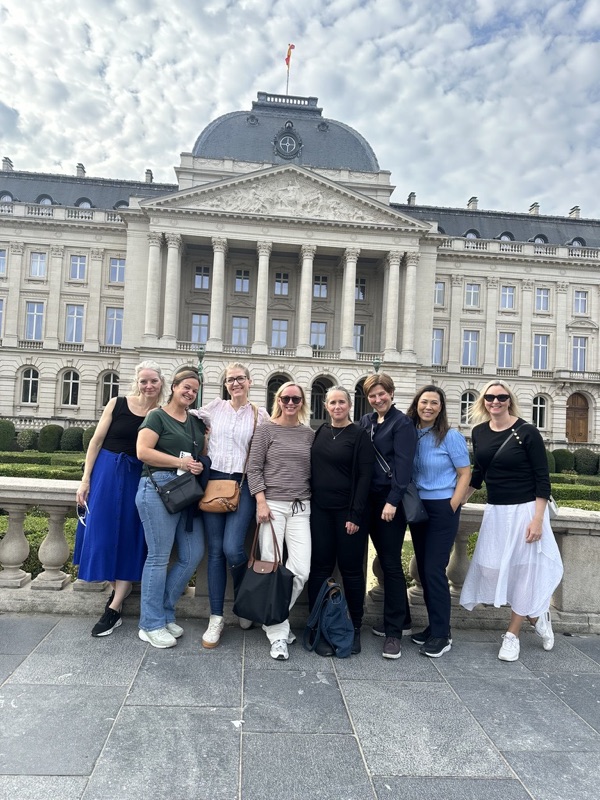
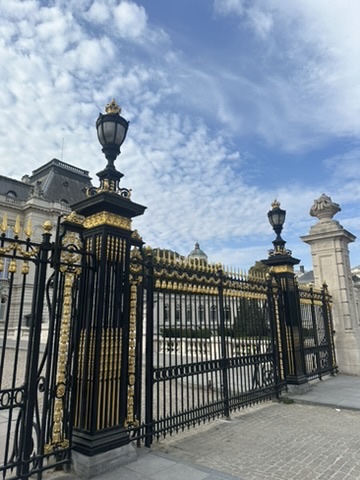
In the summer of 2026 the palace was open from 3 July to 16 August, closed on Mondays. It was the first season after several years of restoration work on the facade and windows, and the first time an entrance fee was charged: 10 euros for everyone aged 13 and over, free for children under 13. A timed ticket had to be booked in advance.
The dates for next summer are announced on the official visitor site, koninklijkpaleis-palaisroyal.be. So if you are going to Brussels and want to get inside the palace, summer is the season to aim for.
Practical information
The palace is on the Place des Palais (Paleizenplein) in the centre of Brussels. The tram is the easiest way: lines 92 and 93 stop at Palais, right by the palace. The nearest metro stations are Trône/Troon on lines 2 and 6, and Parc/Park on lines 1 and 5.
If you come outside the season, as we did, there is still plenty to see nearby. Right next to the palace, at Place des Palais 7, is the BELvue Museum of Belgian history, and from there you can go down into the Coudenberg, the excavated remains of the palace that burned in 1731. At the very least you get to see the foundations of where it all began.