Osborne House sits near East Cowes on the Isle of Wight in southern England, and was the summer residence and private retreat of Queen Victoria and Prince Albert. The house was built between 1845 and 1851, after the royal couple sought a home away from court life in London and Windsor, where the family could live more privately.
Prince Albert played a central role in the design, working with the builder Thomas Cubitt. The result was a building in the Italian Renaissance style, with two distinctive towers reminiscent of an Italian villa. Its setting overlooking the Solent gave views that Albert felt resembled the Bay of Naples.
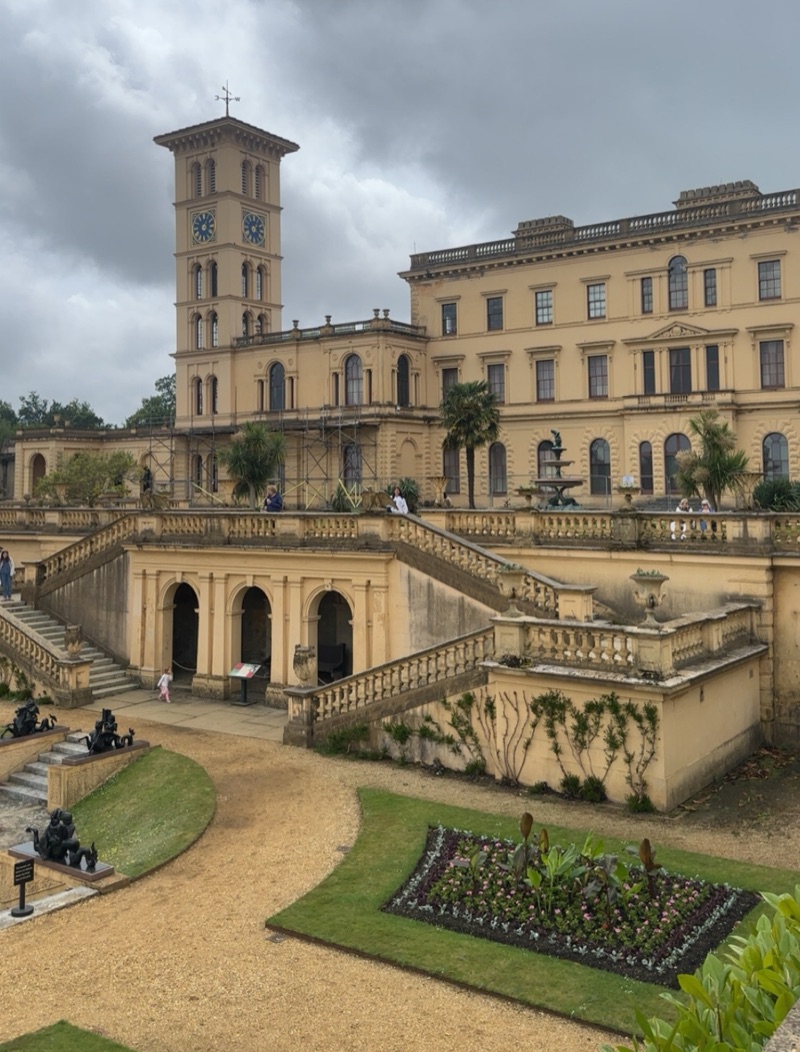
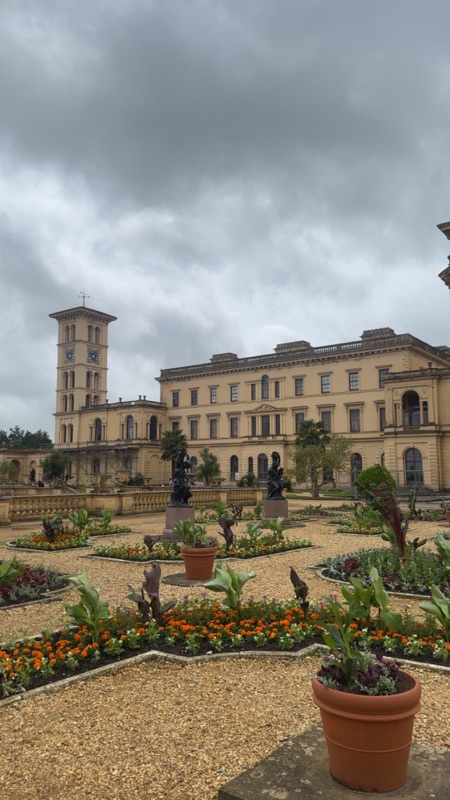
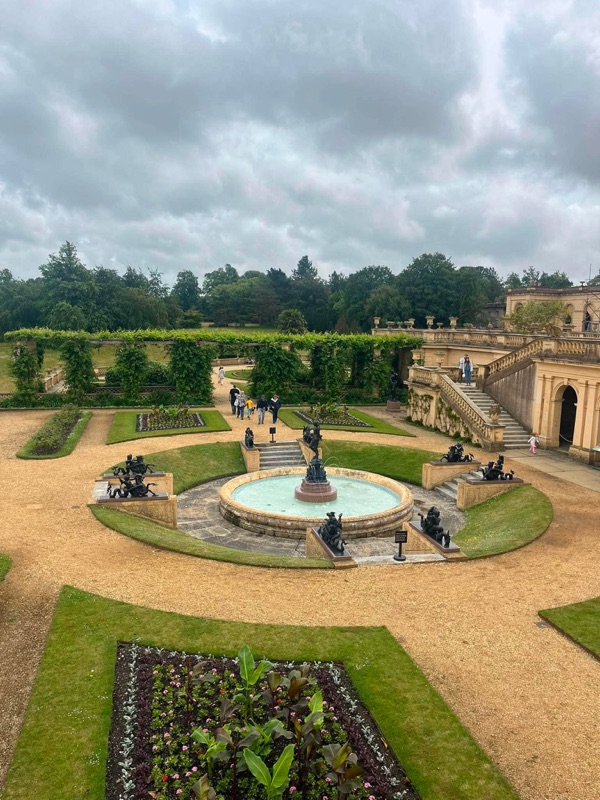
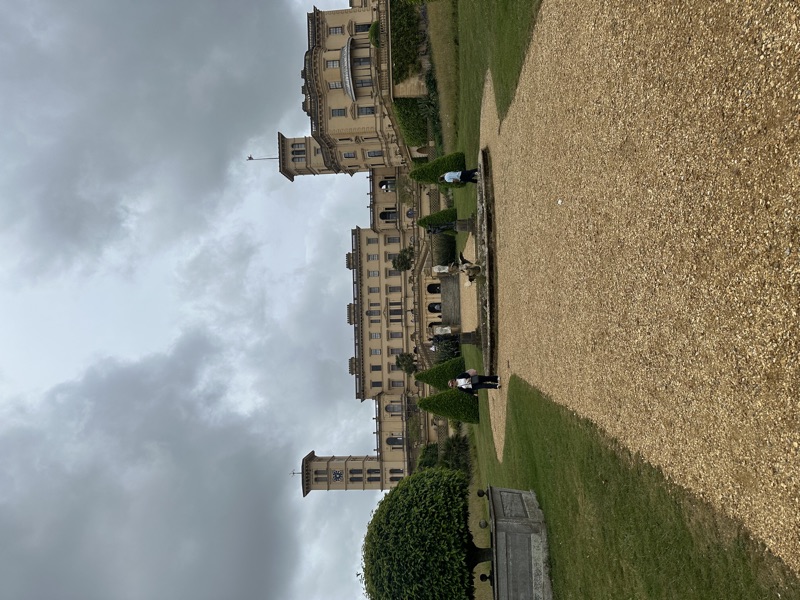
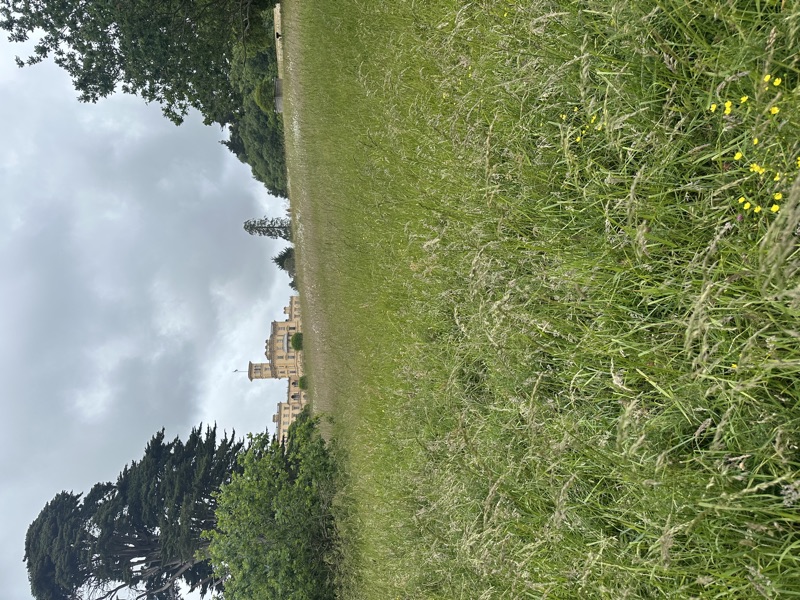
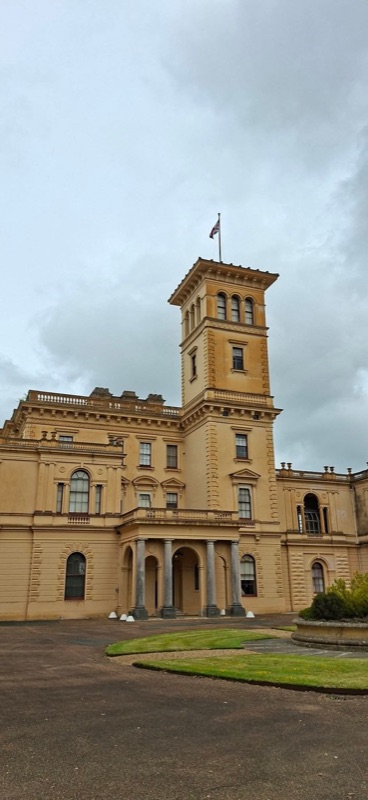
Osborne House with its distinctive clock tower, seen from the terrace gardens. Photo: Linda NordvikThe terrace gardens below the house, with a fountain, flower beds and a pergola. Photo: Gry Elisabeth Sommer SivertsenOsborne House with its two distinctive towers. Photo: Linda NordvikOsborne House seen from the grounds, across the flowering meadows. Photo: Linda NordvikThe entrance front of Osborne House, with the columned porch where the carriages drew up and the flag tower above. Photo: Monika Stigen
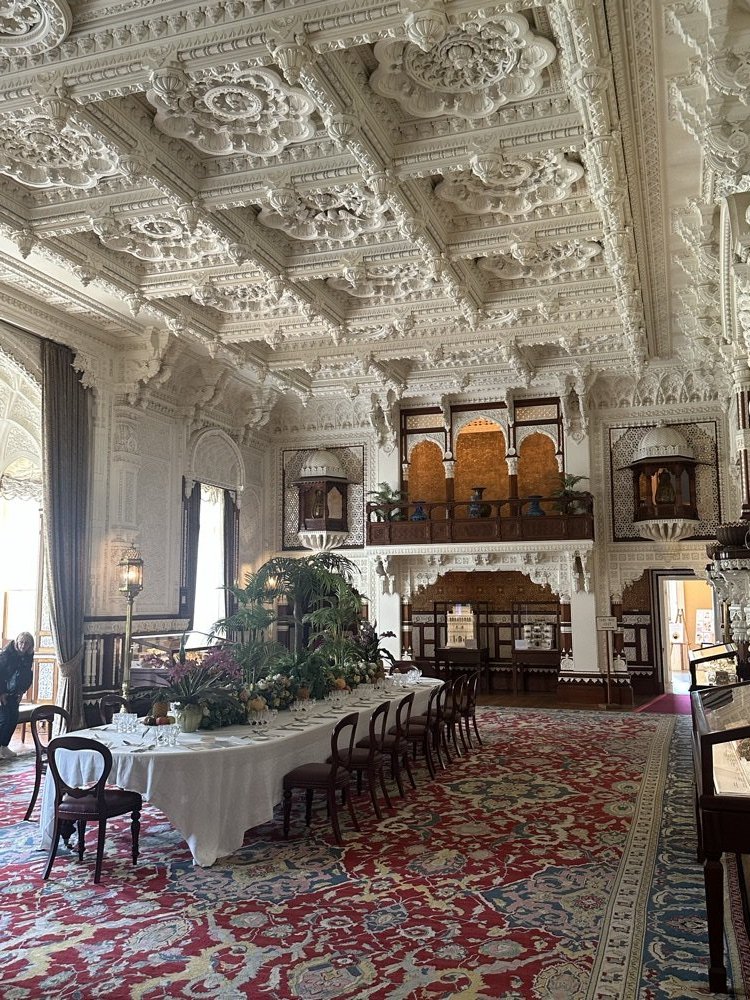
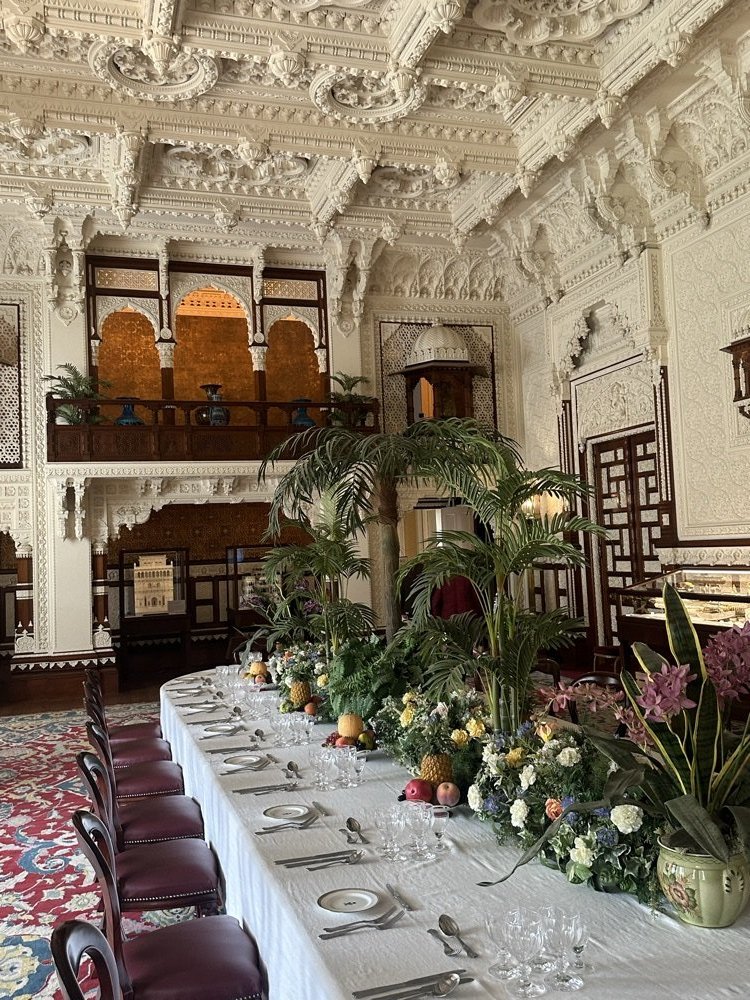
Inside, the house is known for its lavish state and private rooms. One highlight is the Durbar Room, a large banqueting hall in Indian style created in the 1890s, reflecting Victoria's role as Empress of India. In the grounds stands the Swiss Cottage, a chalet where the royal children learned cooking, housekeeping and gardening, along with a small museum holding the children's collections. Down by the sea is a private beach with the Queen's own bathing machine.
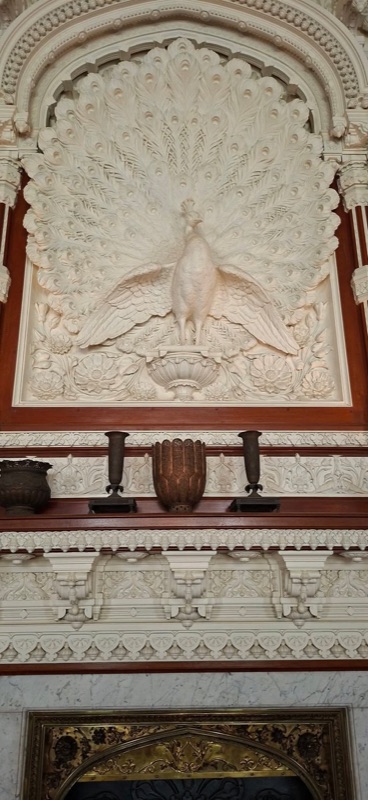
The Durbar Room, the grand banqueting hall in Indian style, with richly decorated ceiling and walls. Photo: Linda NordvikThe banqueting table in the Durbar Room set for a meal. Photo: Linda NordvikThe great plaster peacock above the fireplace is one of the highlights of the Durbar Room. The hall was created in the 1890s by Bhai Ram Singh, with John Lockwood Kipling as adviser. Photo: Monika Stigen
Osborne also holds a sombre place in history: it was here that Queen Victoria died on 22 January 1901. After her death, King Edward VII gave the estate to the nation, and parts of it were used as a naval college and a convalescent home, among other things. Today Osborne House is managed by English Heritage and open to the public, with rooms, gardens and beach preserved much as they were in Victoria's day.
A large portrait of Queen Victoria, Prince Albert and five of their nine children. Photo: Linda NordvikA painting of Queen Victoria lying in state at Osborne. After the Queen died at Osborne on 22 January 1901, her coffin was moved on 25 January to the dining room, which had been transformed into a funeral chapel. There she lay in state for eight days, watched over by soldiers of the Grenadier Guards, before the coffin was taken to the mainland on 1 February. Photo: Lise Fosdahl Mørk
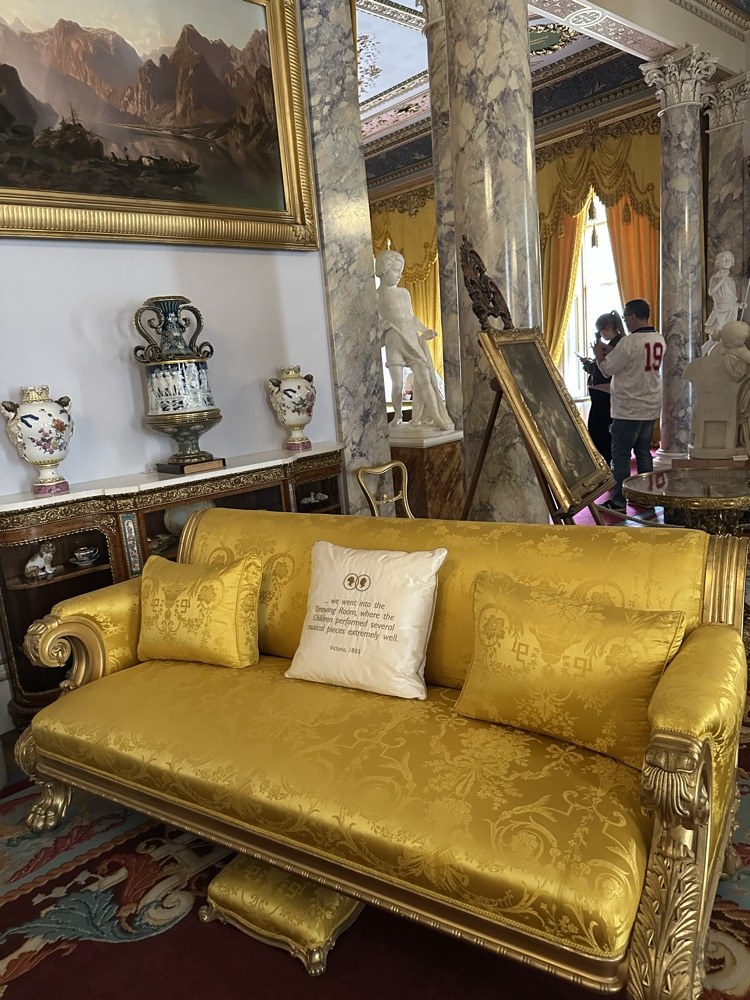
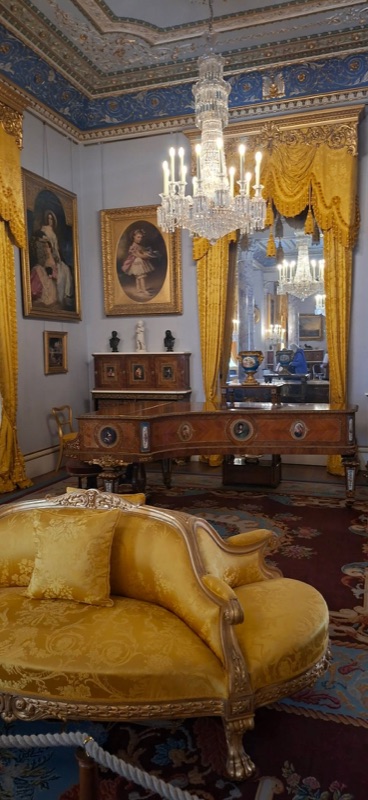
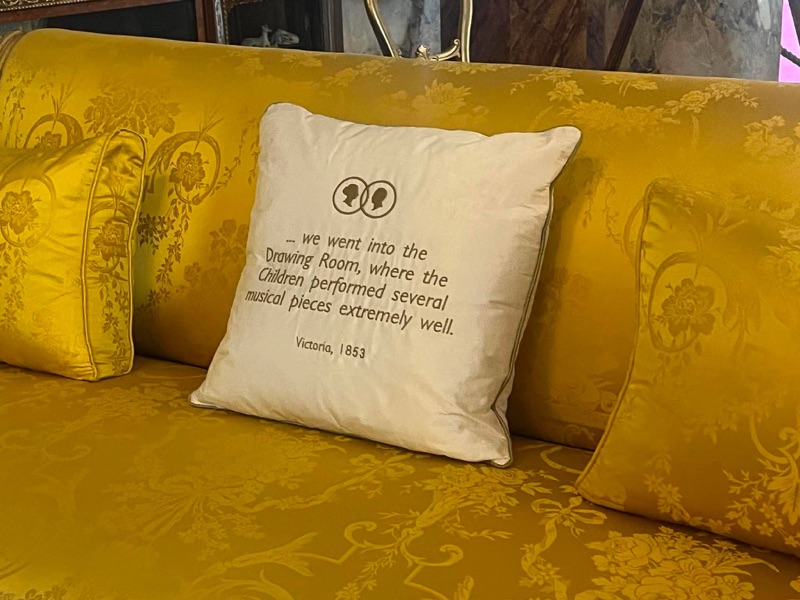
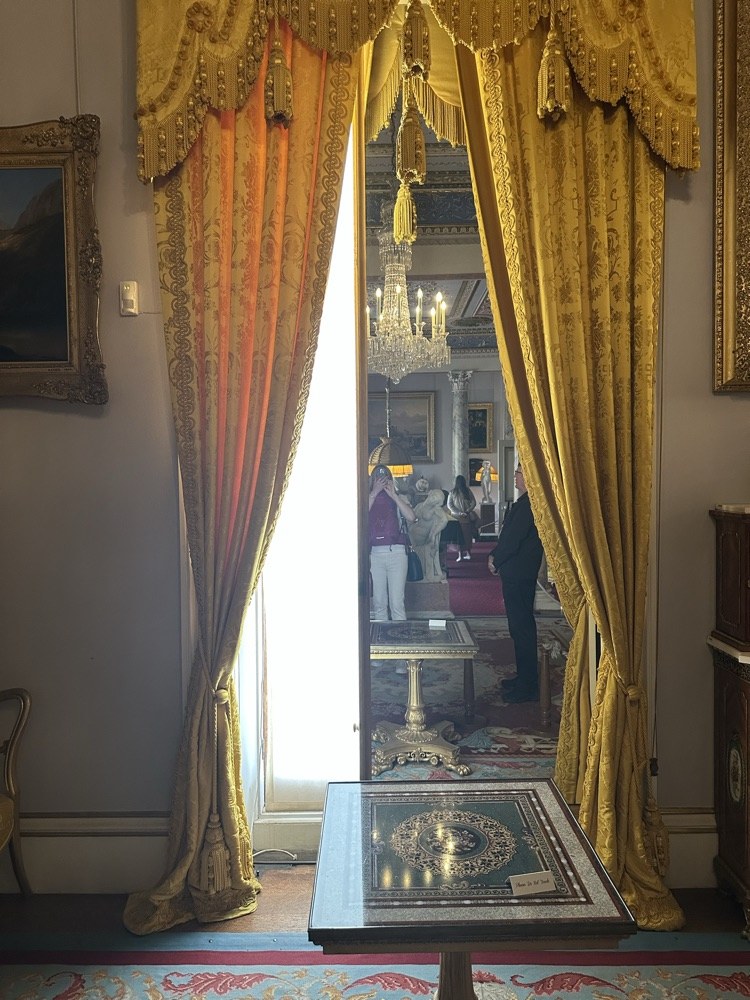
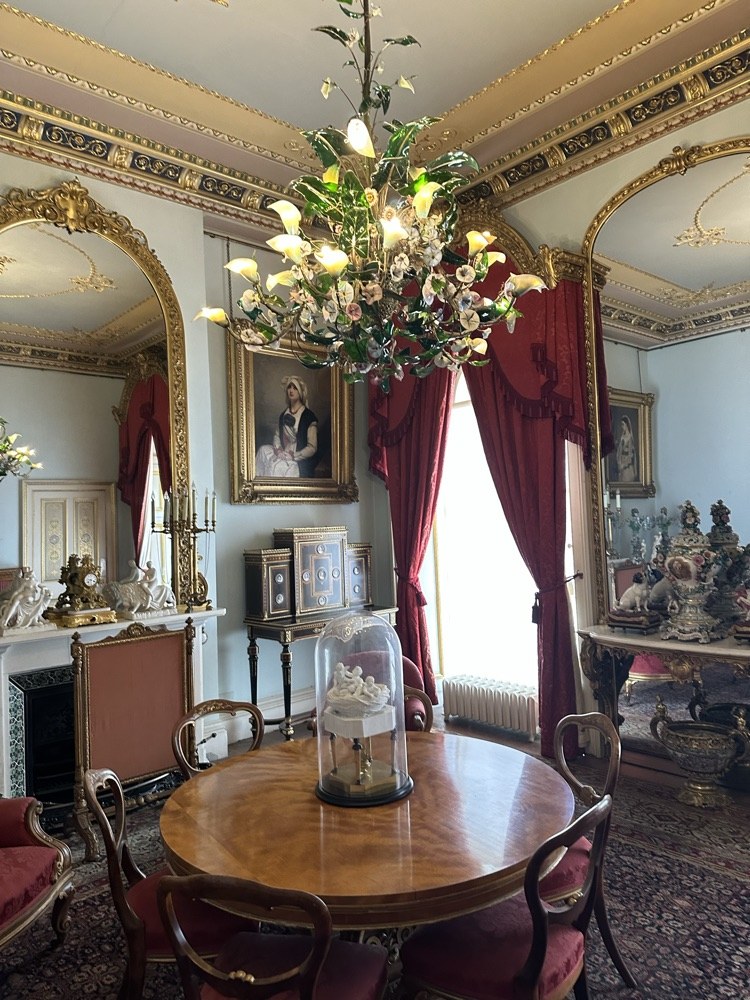
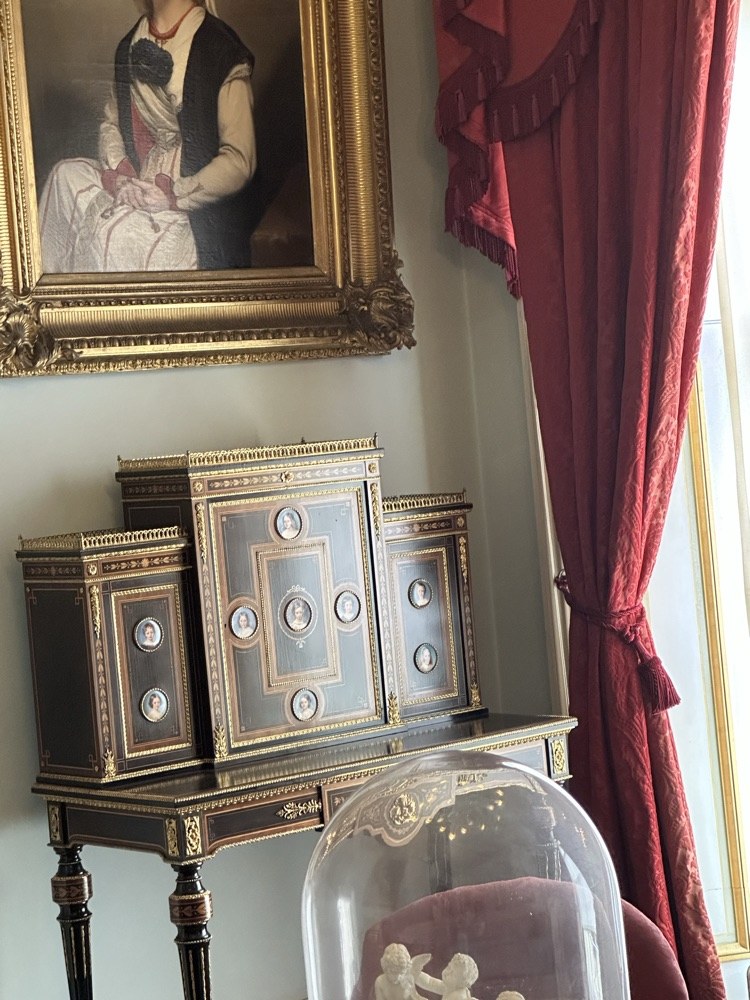
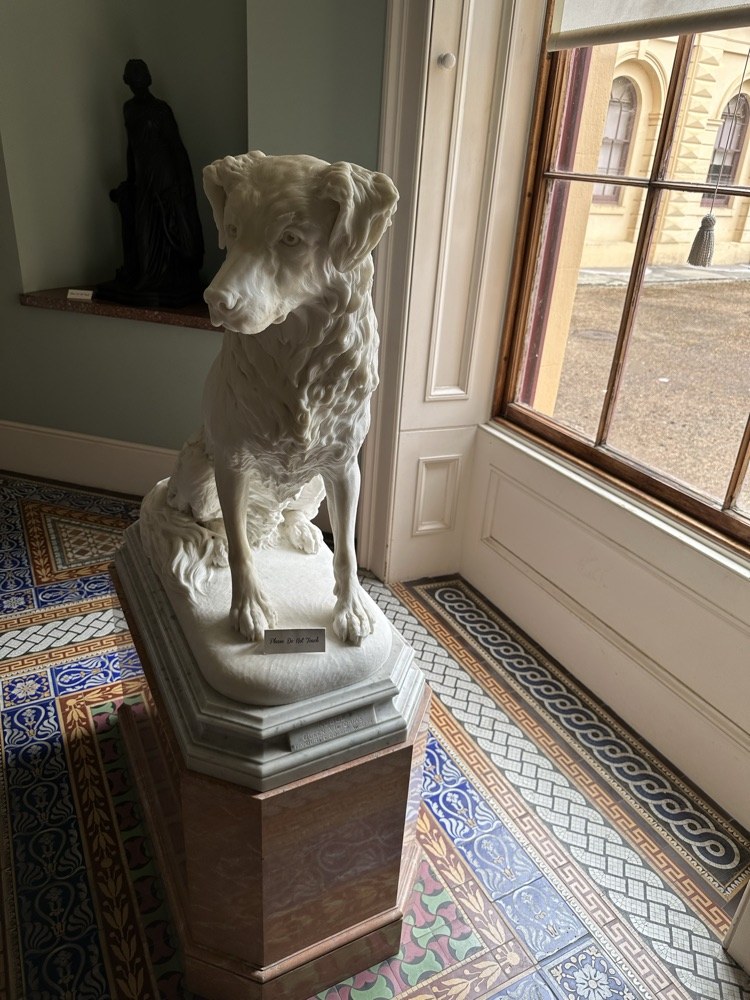
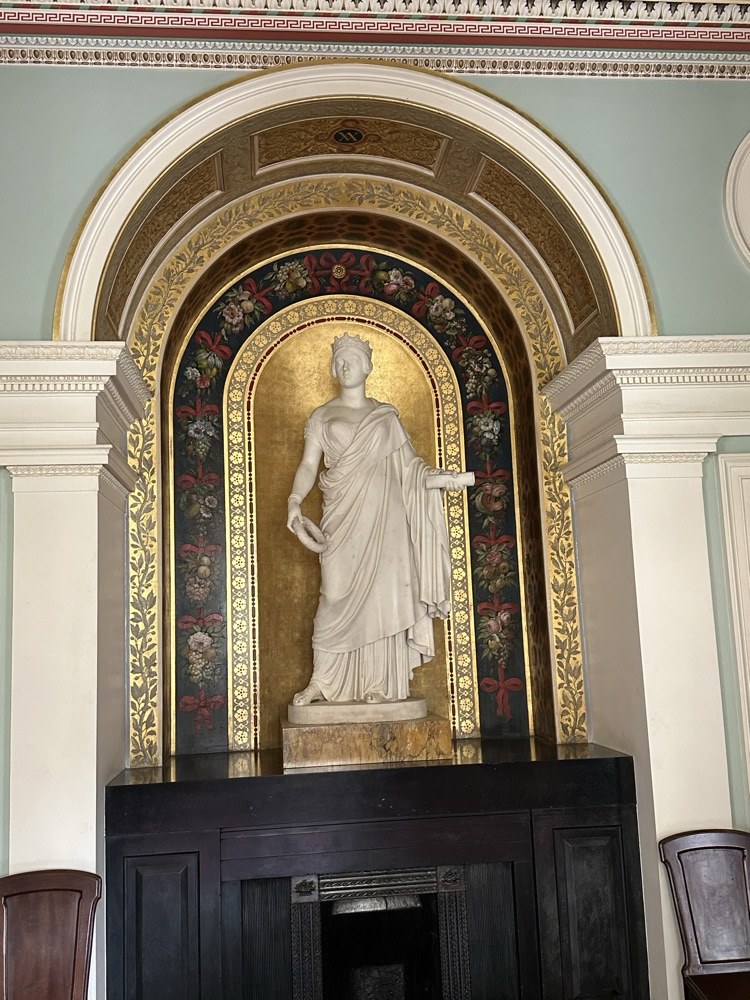
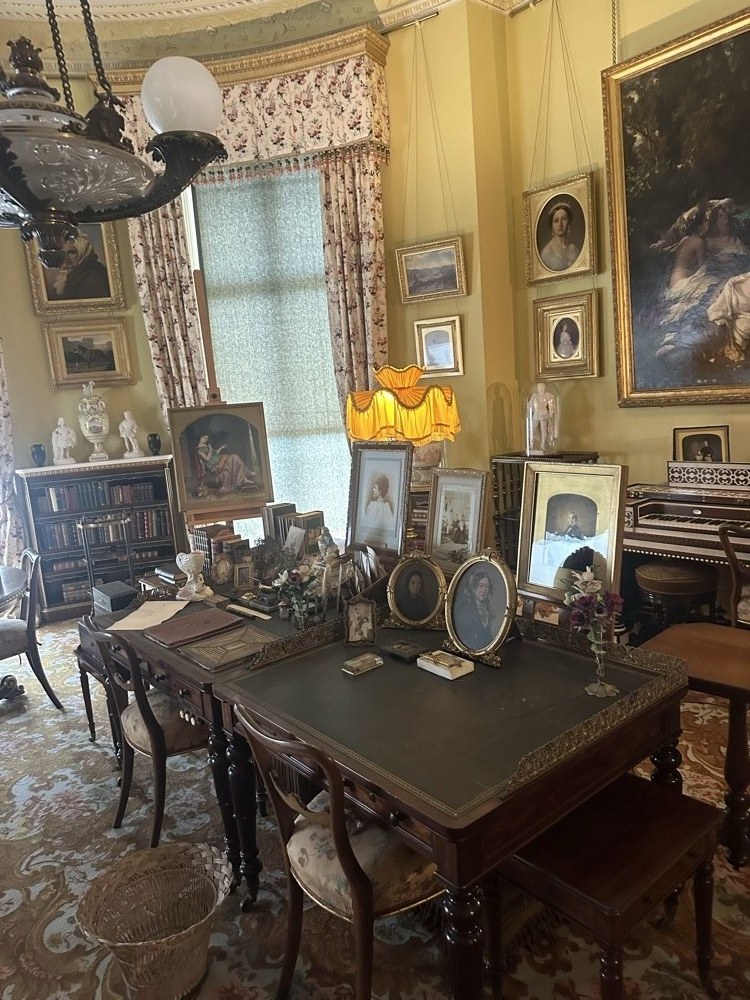
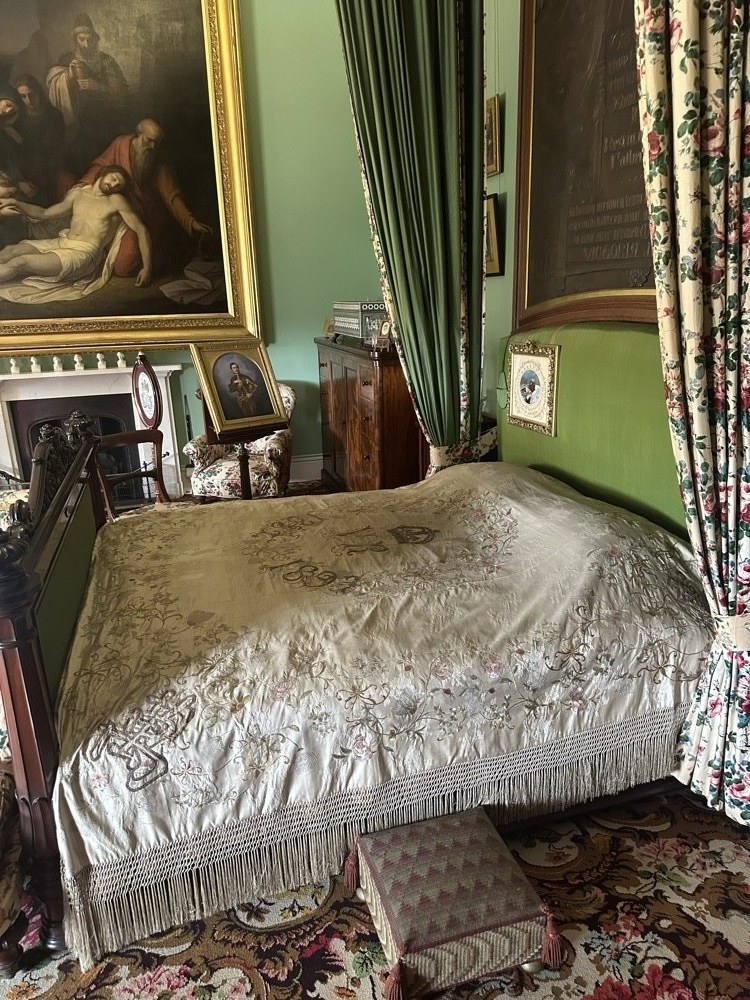
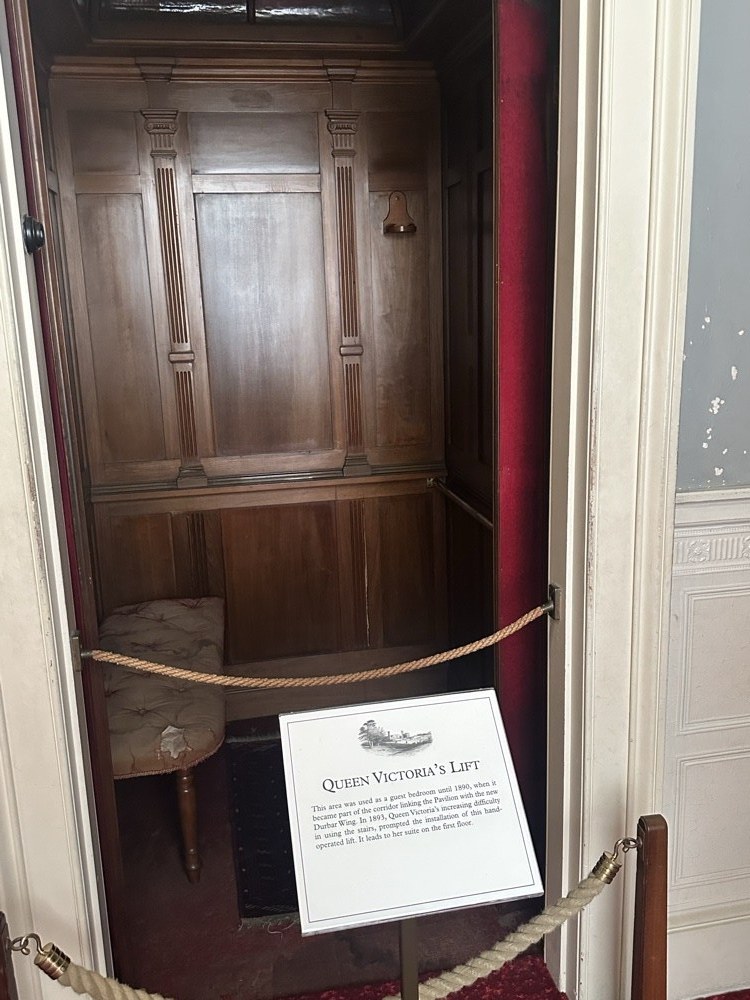
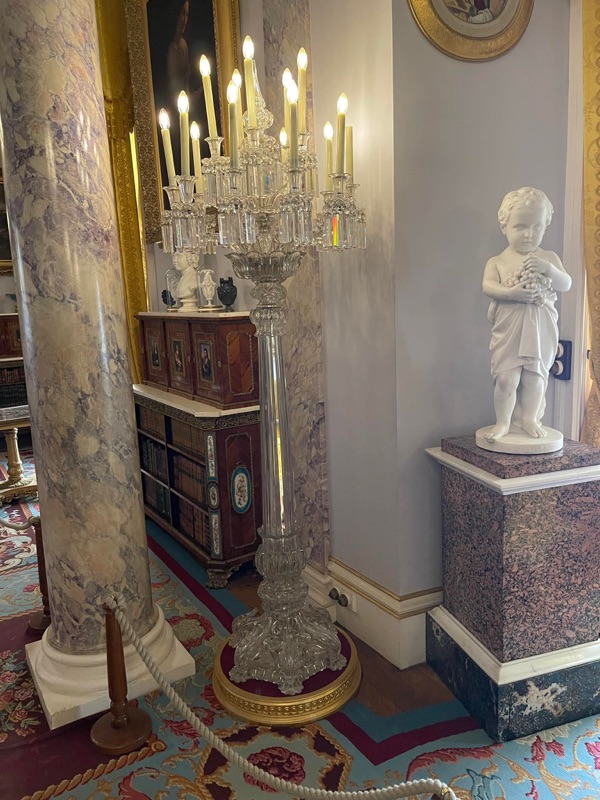
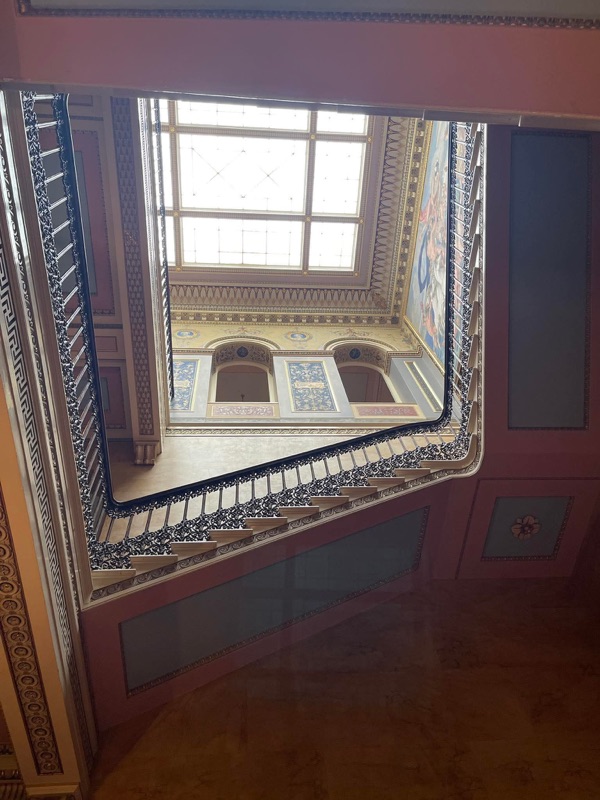
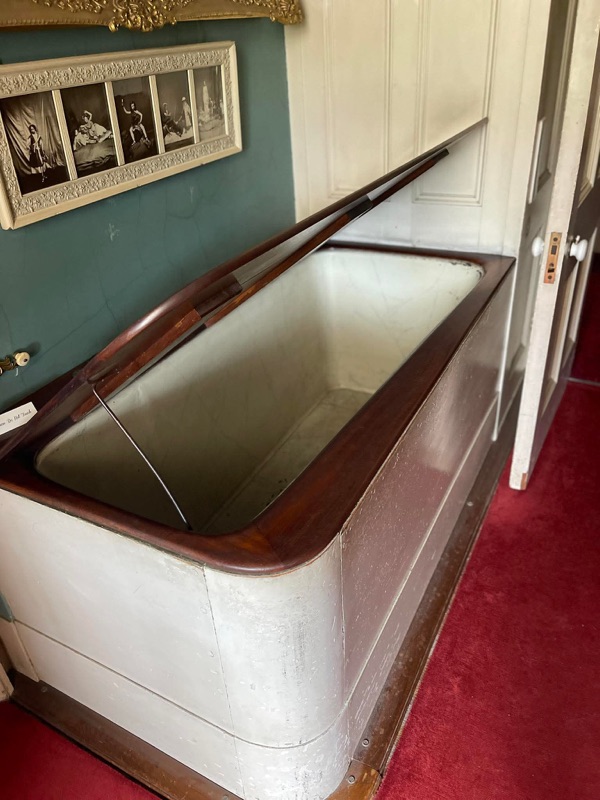
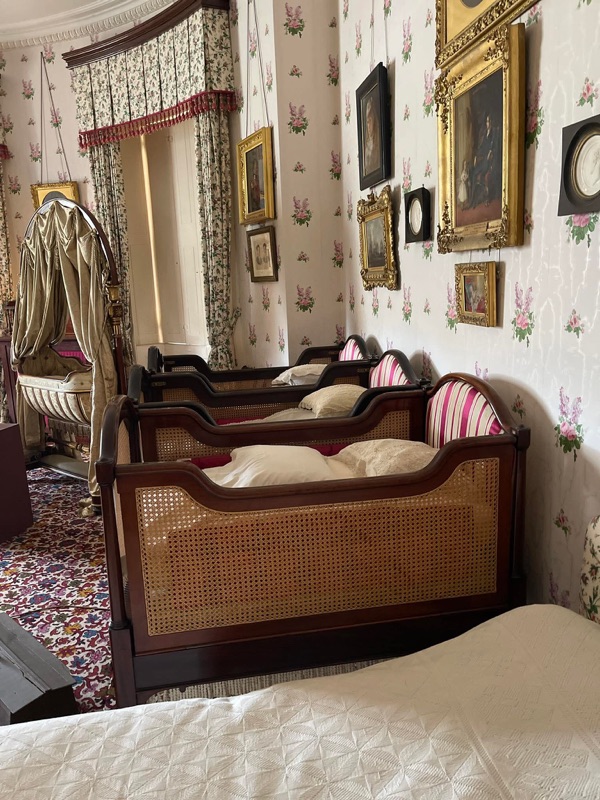
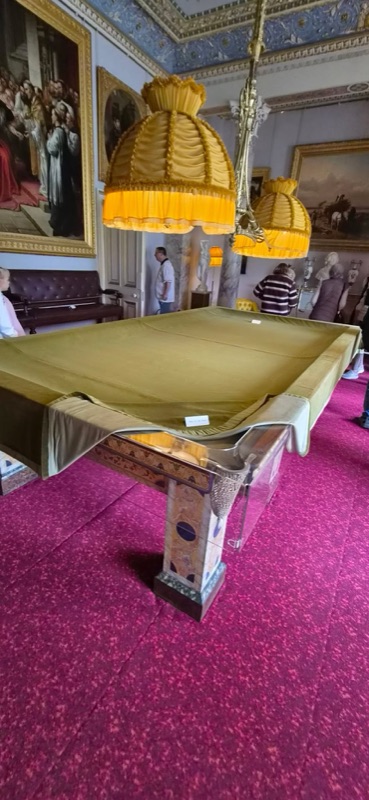
The drawing room, where the royal children performed musical pieces, among other things. Photo: Linda NordvikThe grand piano in the drawing room. Note the two stools at the piano, one for Queen Victoria and one for Prince Albert, who often played duets together. Photo: Monika StigenOn the sofa in the drawing room lies a cushion with a quote from Queen Victoria's journal from 1853: "... we went into the Drawing Room, where the Children performed several musical pieces extremely well." Photo: Gry Elisabeth Sommer SivertsenLarge mirrors were placed by the windows. In the evening they pushed the mirrors in front of the windows so they reflected the light in the room, while during the day they pushed the mirrors aside to let daylight in through the windows. Photo: Linda NordvikThe audience room at Osborne House. Photo: Linda NordvikA cabinet adorned with portraits of Queen Victoria and Prince Albert's nine children. Photo: Linda NordvikA marble statue of Noble, Queen Victoria's favourite collie. Queen Victoria was a great dog lover and owned more than 80 collies during her lifetime. Photo: Linda NordvikA marble statue in a gilded niche at Osborne House. Photo: Linda NordvikQueen Victoria and Prince Albert's desks in their private sitting room, where they worked side by side on state papers. Victoria's desk is on the left, Albert's on the right. Photo: Linda NordvikThis was Queen Victoria's bedroom, and it was in this bed that she passed away in January 1901. Photo: Linda NordvikQueen Victoria's private lift, installed in 1893 because the Queen found the stairs increasingly difficult. The hand-operated lift led up to her suite on the first floor. Photo: Linda NordvikThe candelabra is in cut glass from F. & C. Osler, ordered by Prince Albert for Osborne as a present for Queen Victoria's birthday on 24 May 1848. The marble statue is Prince Alfred, Queen Victoria's second son, depicted as an allegory of autumn with a bunch of grapes in his hands. The statue, Prince Alfred as Autumn, was carved in white marble by Mary Thornycroft, commissioned by Prince Albert in 1848, and is part of the series depicting the four eldest children as the seasons. The first in the series was Princess Alice as Spring, made in 1845. Photo: Christine HaagensenThe staircase at Osborne House, with decorated walls and a skylight letting in the daylight. Photo: Christine HaagensenQueen Victoria's bath, encased in mahogany with a fold-down lid. Photo: Christine HaagensenThe nursery at Osborne House, with cane-sided children's beds and a canopied cradle. Photo: Christine HaagensenThe billiard table at Osborne House, designed by Prince Albert himself and made by G.E. Magnus. The table is made entirely of slate, decorated and enamelled to imitate marble. The light fitting above the table was also designed by Prince Albert, and was converted to electricity in 1893. Photo: Lise Fosdahl Mørk
Five of Queen Victoria and Prince Albert's eldest children, dressed as the seasons in a tableau, a popular parlour entertainment in which the participants posed in costume like a living painting. The children performed the tableau for their parents on their wedding anniversary on 10 February 1854, and the photographs were taken by Roger Fenton. Photo: Lise Fosdahl Mørk
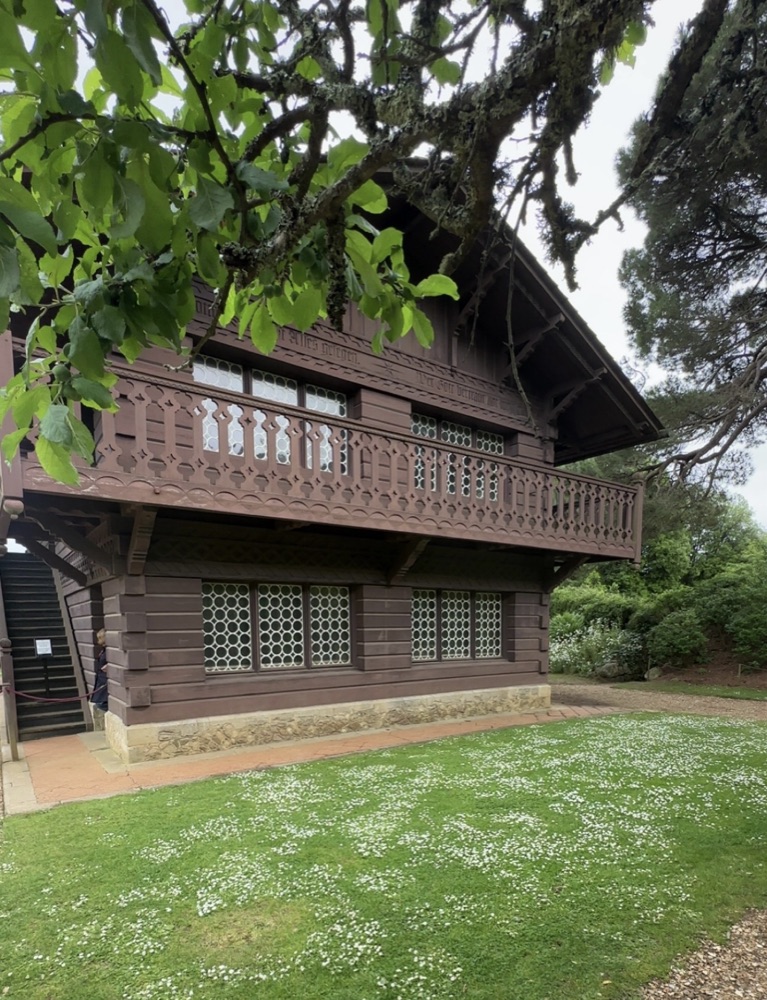
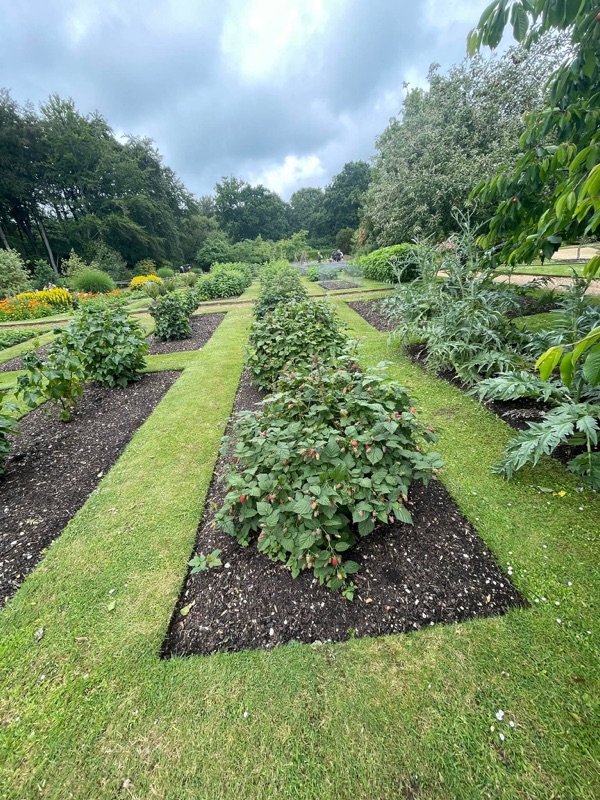
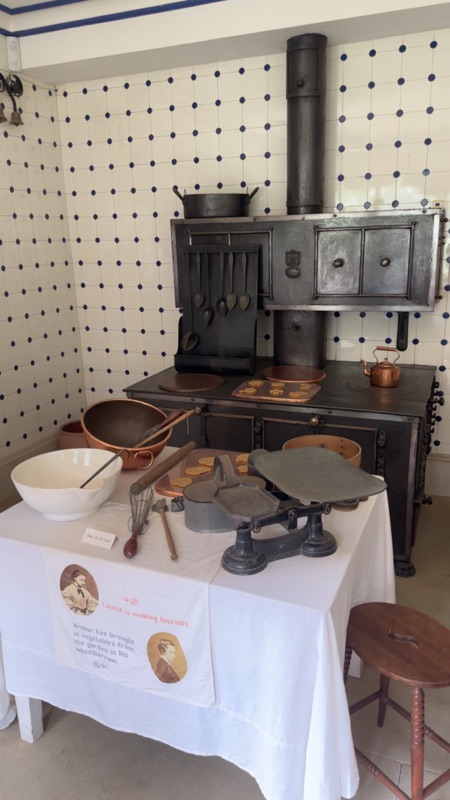
The grounds also include the Swiss Cottage, a chalet built for the royal children. It was dismantled in Switzerland and brought piece by piece to Osborne, where it was reassembled. Here the children were encouraged to garden: each child was given their own rectangular plot to grow fruit, vegetables and flowers, and they sold their produce to their father. Prince Albert used this to teach them the basics of economics. The children also learned to cook in the Swiss Cottage, which had a fully equipped kitchen. Their parents saw this as a way of grounding the children in the everyday activities shared by ordinary people in the kingdom, despite their royal status.
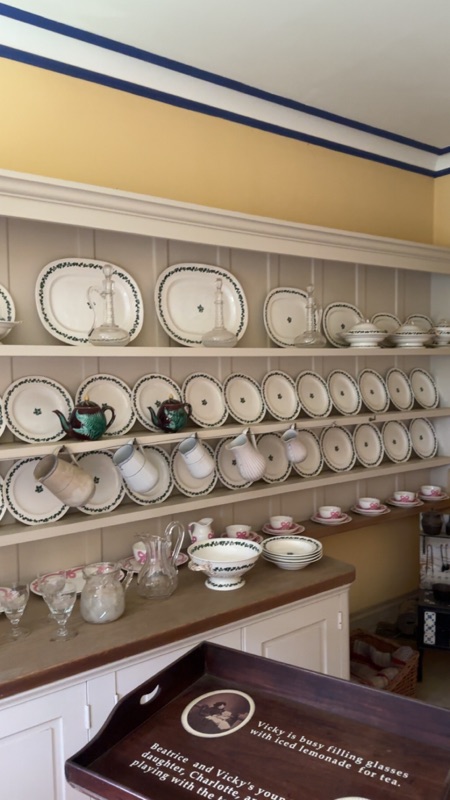
The Swiss Cottage is about a 20 minute walk from Osborne House, and from there it is roughly another 10 minutes to Osborne beach. There is normally a shortcut path from Osborne House down to the beach that takes 10 to 15 minutes to walk, but it was closed due to flood damage when we visited. Photo: Linda NordvikIn the kitchen garden by the Swiss Cottage, the royal children grew fruit, vegetables and flowers in their own plots. Photo: Christine HaagensenChina on the shelves in the Swiss Cottage, where the children learned housekeeping. Photo: Linda NordvikThe kitchen in the Swiss Cottage, where the children learned to cook, with a wood-fired range and period utensils. Photo: Linda Nordvik
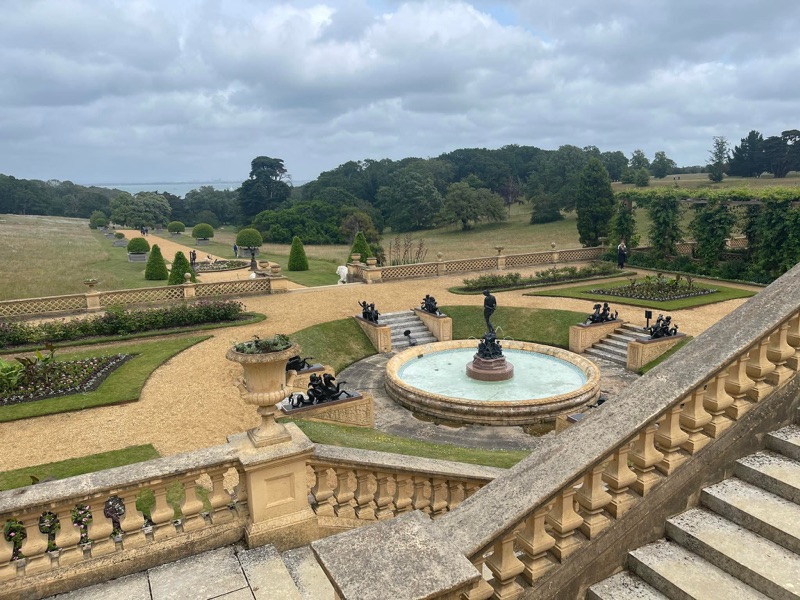
The gardens and grounds were important to both Victoria and Albert, stretching from the Italian-inspired terraces by the house and out across the estate. Here you will find flower beds, fountains and quiet corners beneath the trees.
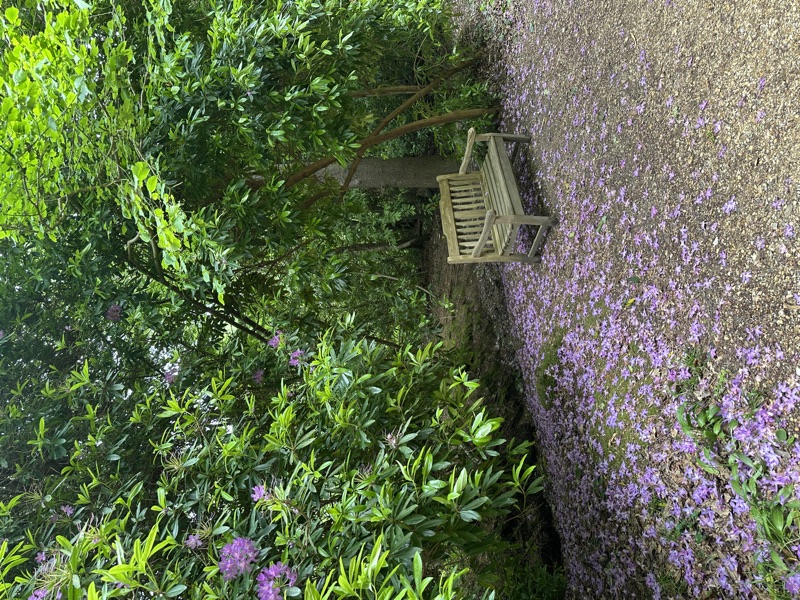
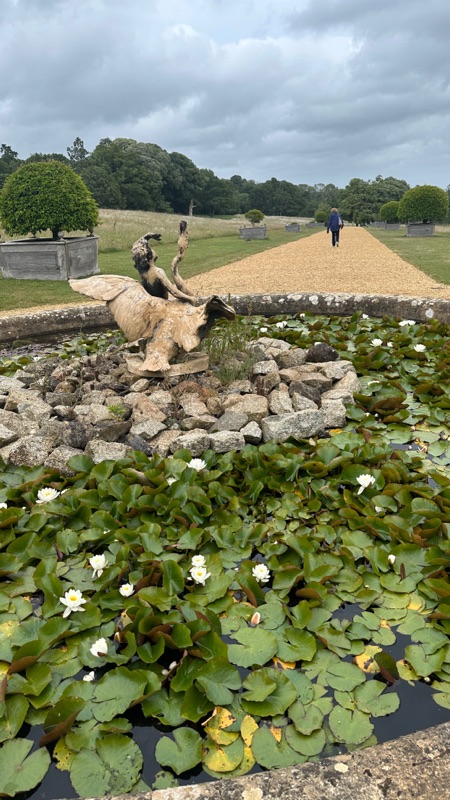
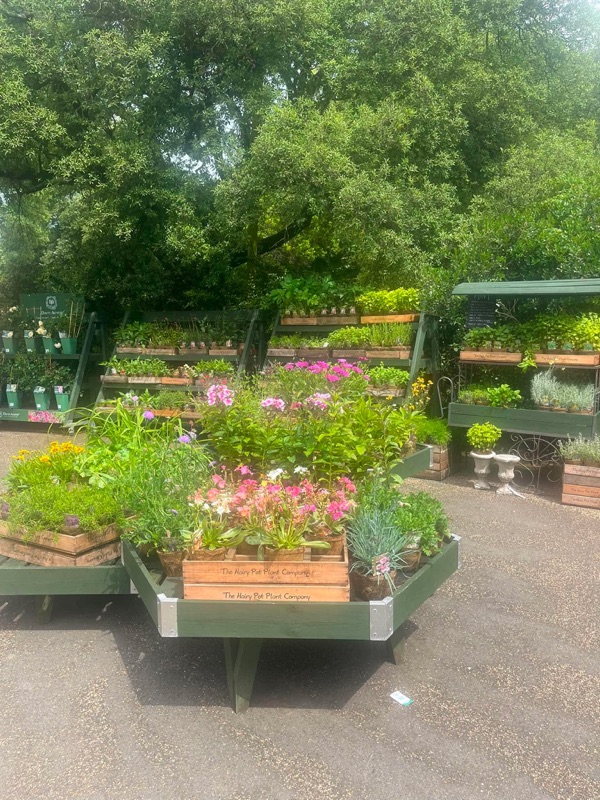
A bench in the grounds, with fallen petals carpeting the path in purple. Photo: Linda NordvikA pond with white water lilies in the grounds. Photo: Linda NordvikView from the terrace over the gardens and grounds, with the Solent on the horizon. Photo: Christine HaagensenBy the entrance next to the souvenir shop, plants and flowers are for sale, so visitors can take a little piece of Osborne home with them. Photo: Gry Elisabeth Sommer Sivertsen
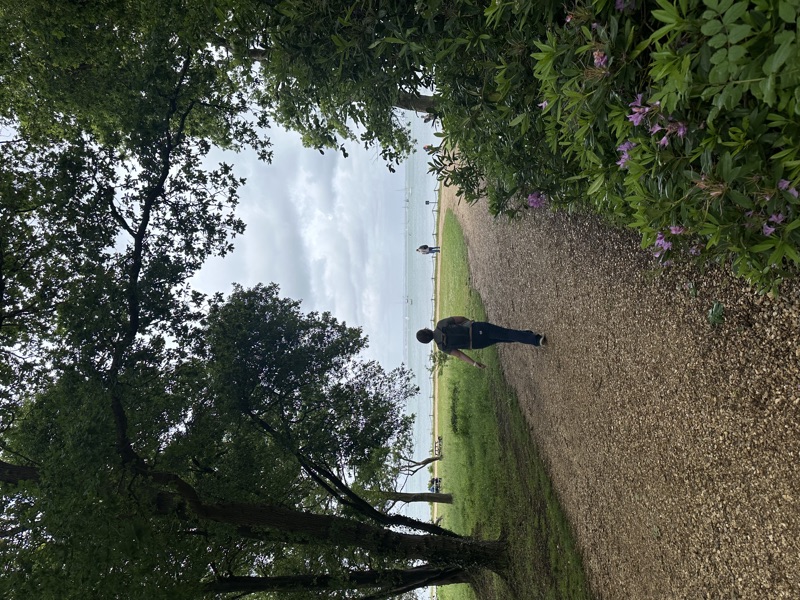
From the grounds, the path continues down to the family's private beach on the Solent, where Queen Victoria bathed from her own bathing machine.
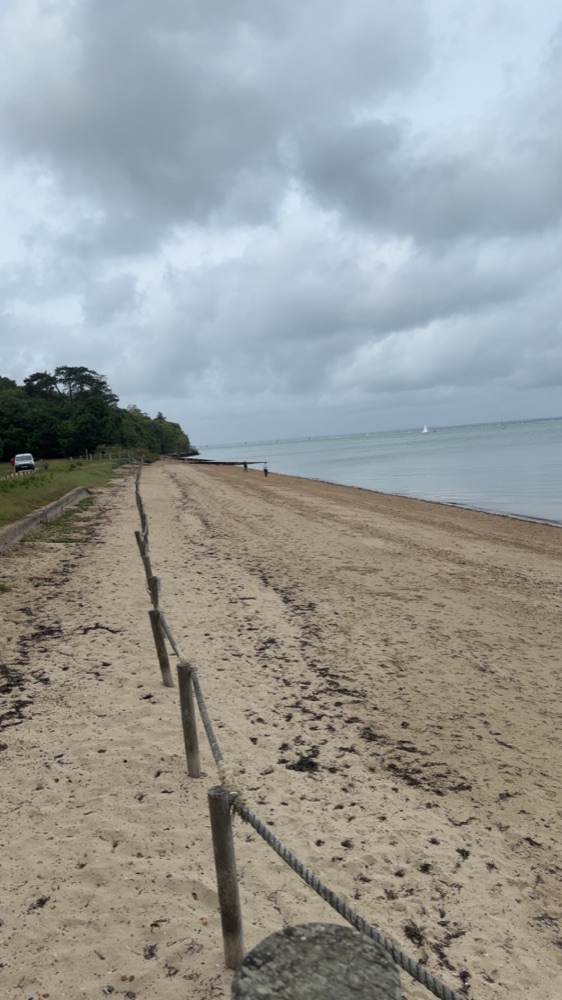
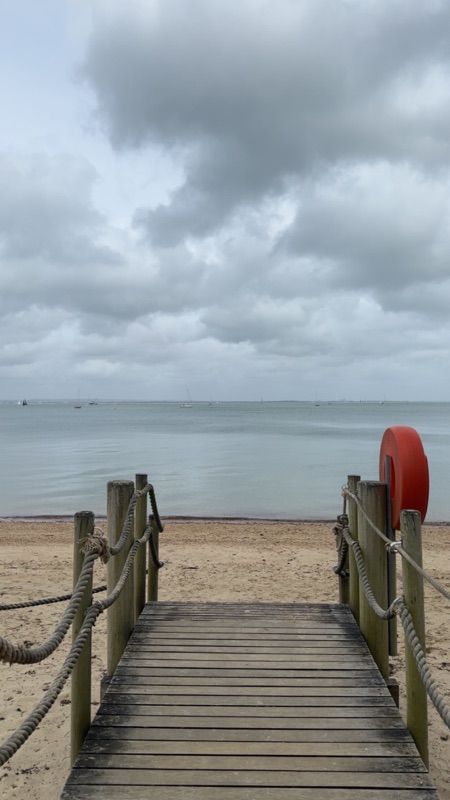
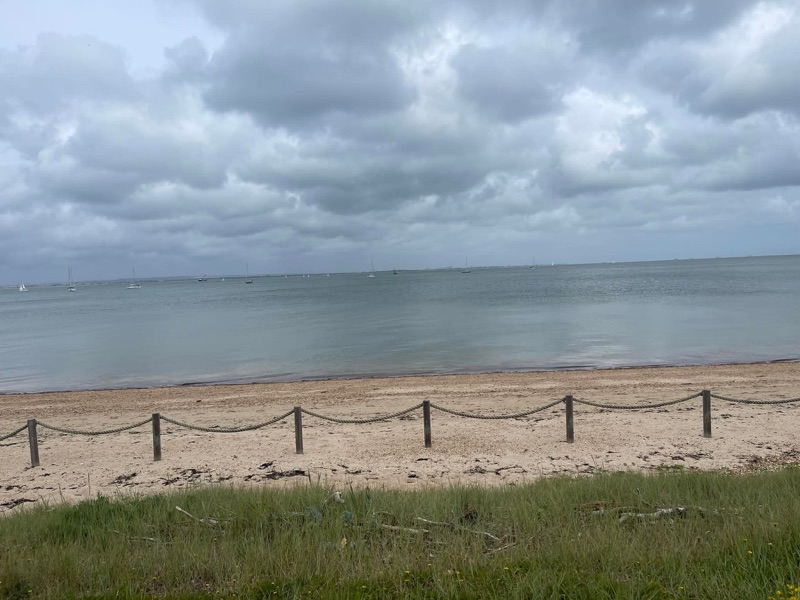
The path down towards the beach, with the Solent in the distance. Photo: Linda NordvikOsborne beach by the Solent. A bathing machine was a small bathing hut on wheels that was pulled out into the water, so that the Queen could enter the sea without anyone seeing her body. Queen Victoria's bathing machine is currently being restored and is therefore not on the beach. Photo: Linda NordvikThe small wooden footbridge down to the beach. Sailing boats can be seen out on the Solent. Photo: Linda NordvikFrom the beach you look across the Solent towards the mainland. Photo: Christine Haagensen
Practical information
Opening hours
Opening hours vary throughout the year. In the main season, from late March to late October, it is usually open daily from 10am to 5pm (last entry 4pm). In winter there are reduced hours, with the ground floor and the gardens open Wednesday to Sunday, and some closed days. Always check the English Heritage website for up-to-date times before visiting. Tickets can be purchased here: english-heritage.org.uk.
Getting there
From Southampton you can take the Red Funnel ferry across to East Cowes. The car ferry between Southampton (Town Quay) and East Cowes takes around 55 minutes and also carries foot passengers. From the ferry terminal in East Cowes it is about a 15 to 20 minute walk to Osborne House.
Ferry fares for foot passengers
For foot passengers, a one-way ticket starts at around £14. On some sailings there are also cheaper day-return options. Fares vary by time and demand, so it is worth checking for current prices. Ferry tickets can be purchased here: redfunnel.co.uk.
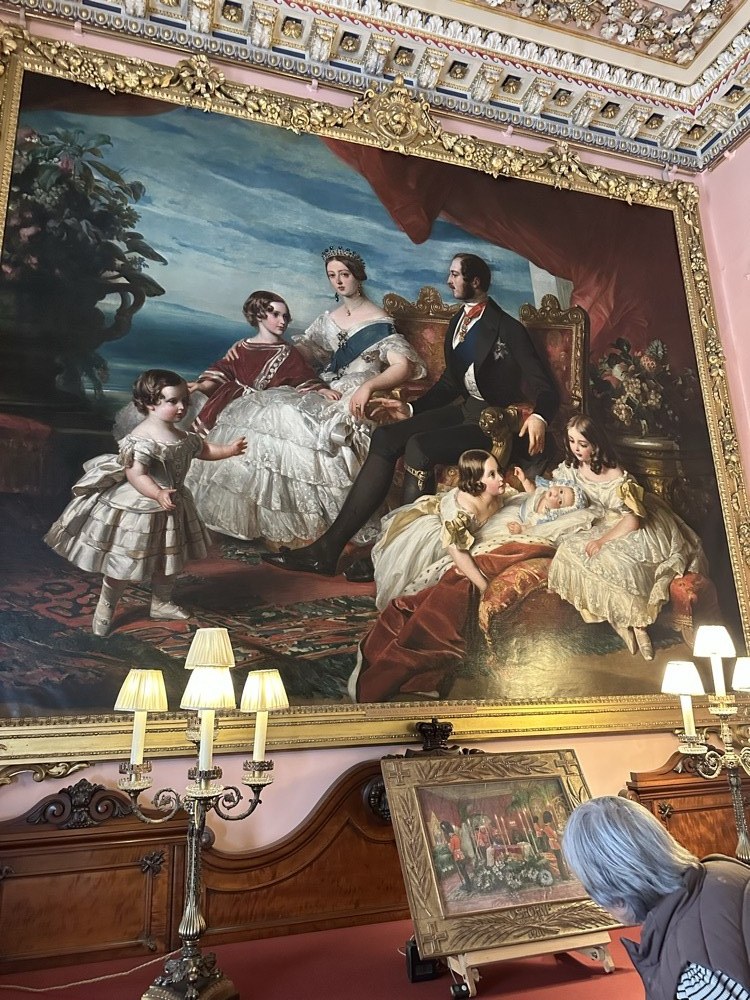 A large portrait of Queen Victoria, Prince Albert and five of their nine children. Photo: Linda Nordvik
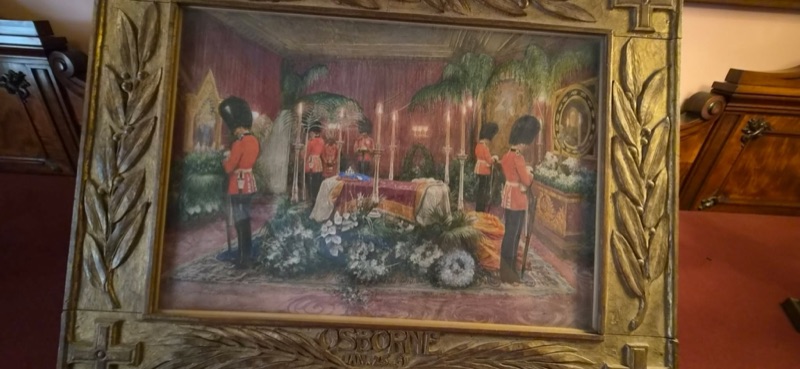 A painting of Queen Victoria lying in state at Osborne. After the Queen died at Osborne on 22 January 1901, her coffin was moved on 25 January to the dining room, which had been transformed into a funeral chapel. There she lay in state for eight days, watched over by soldiers of the Grenadier Guards, before the coffin was taken to the mainland on 1 February. Photo: Lise Fosdahl Mørk
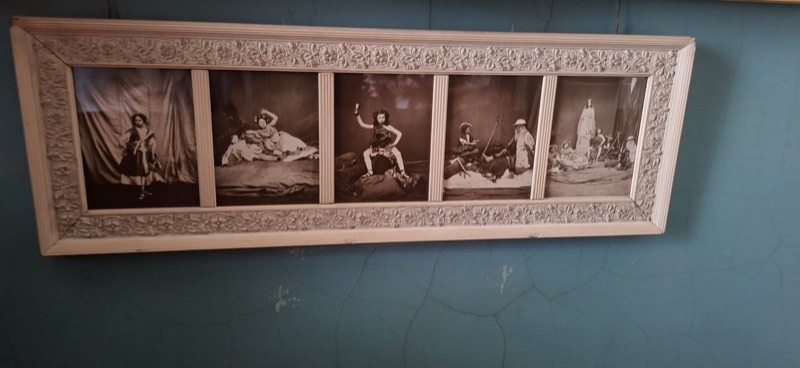 Five of Queen Victoria and Prince Albert's eldest children, dressed as the seasons in a tableau, a popular parlour entertainment in which the participants posed in costume like a living painting. The children performed the tableau for their parents on their wedding anniversary on 10 February 1854, and the photographs were taken by Roger Fenton. Photo: Lise Fosdahl Mørk