Photo: DPPA
Only one in five is financially healthy: Máxima meets Ghana's farmers
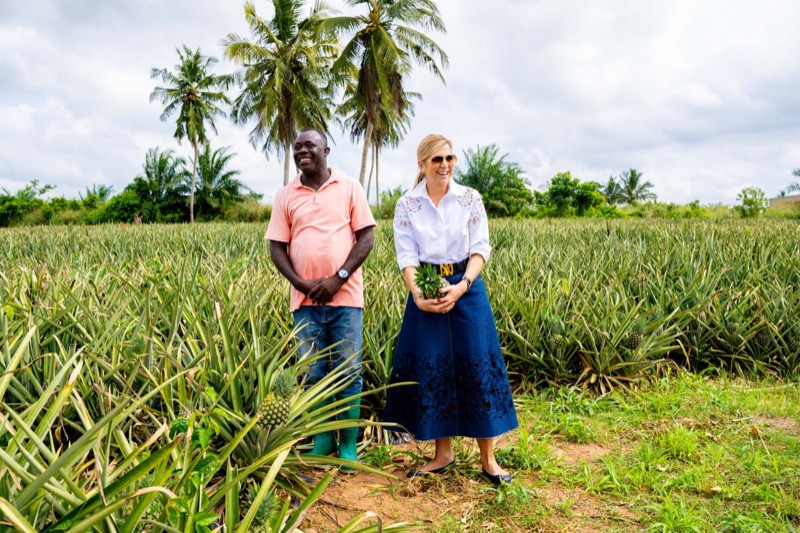
Queen Máxima visited a pineapple farm and a fruit factory in Ghana for the UN. She wanted to hear how farmers cope when the harvest fails, in a country where only 22 per cent of adults are financially healthy.
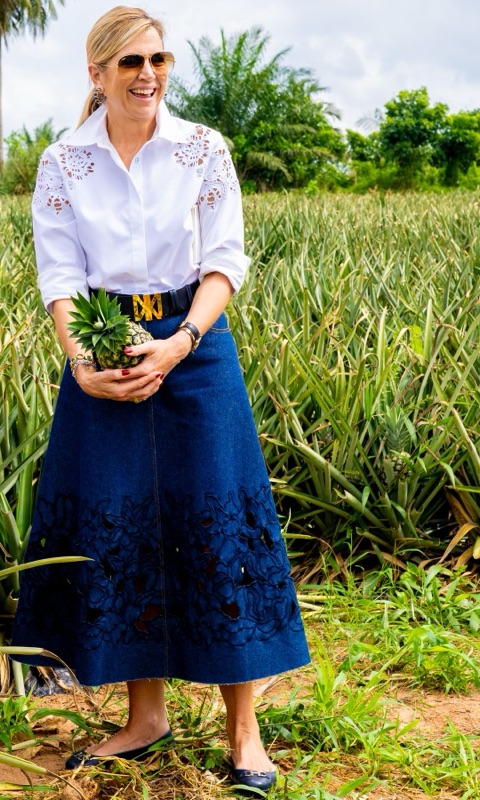
Queen Máxima on Tuesday visited a pineapple farm and a fruit-drying factory in Adeiso, around 70 kilometres from the capital Accra in Ghana. She is in the country for the UN, where she works to help people gain better control of their money. It was the first full day of a four-day visit.
Ghana is among the African countries where most people have a bank account. More than eight in ten adults do. But according to a 2021 survey, only 22 per cent of adults are financially healthy. 44 per cent are getting by, while 34 per cent are financially vulnerable.
A farmer for 22 years
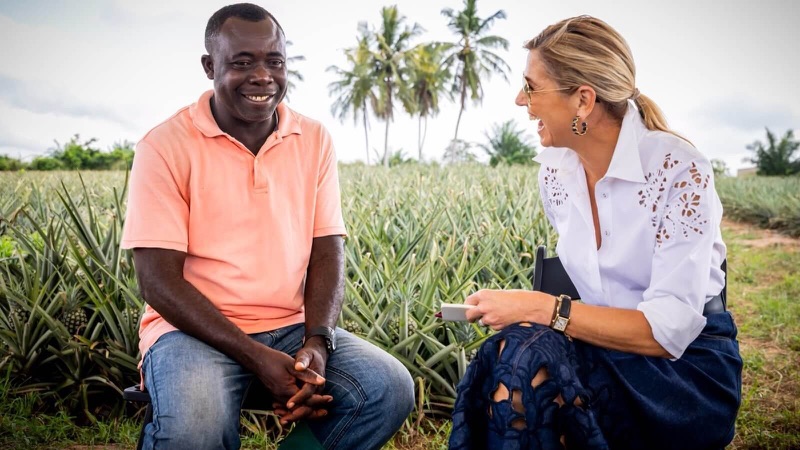
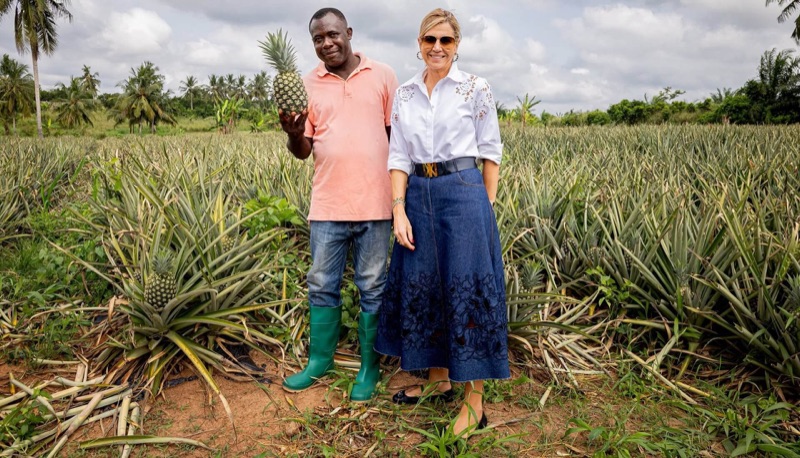
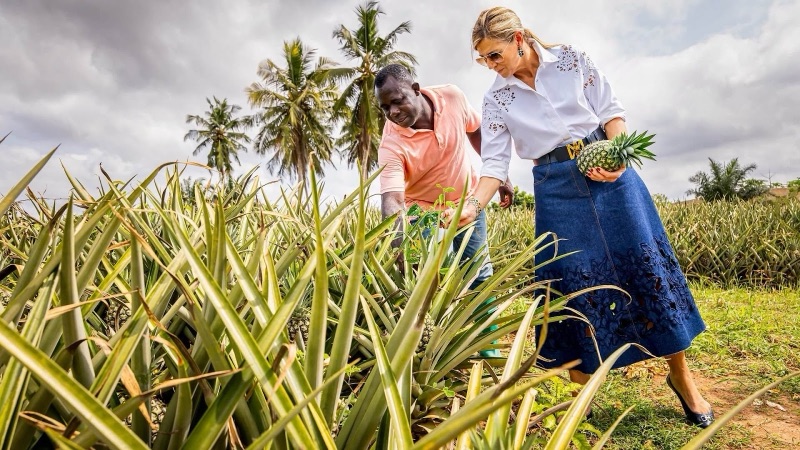
Out in the field the Queen met pineapple farmer Kweku Atta Apediego. He has run the farm for 22 years, and for the past twelve years he has sold his pineapples to the fruit company HPW.
Máxima wanted to know how he and his family manage, and what happens when something goes wrong. According to the UN, she talked with the farmers about how a poor harvest can hit a family's finances, and how affordable credit and insurance can help them through the hard years.
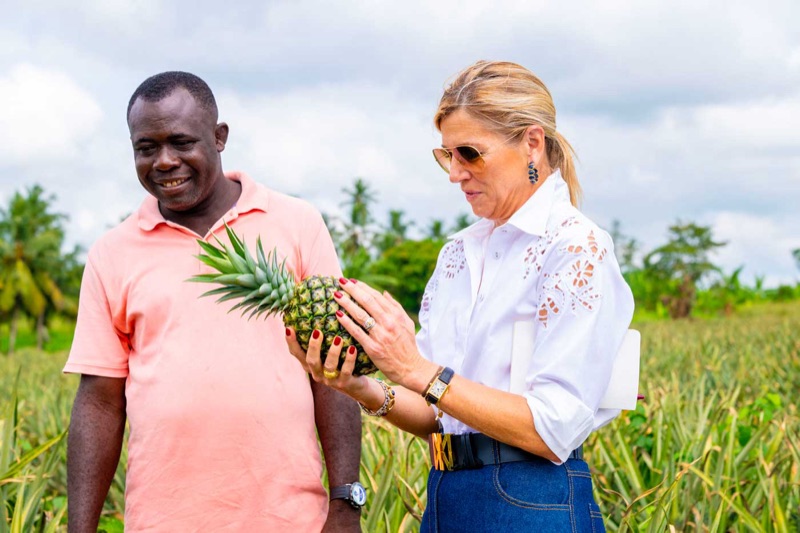
Pineapples from the farm in Adeiso also end up on supermarket shelves in the Netherlands, according to RTL.
Dried fruit from Adeiso
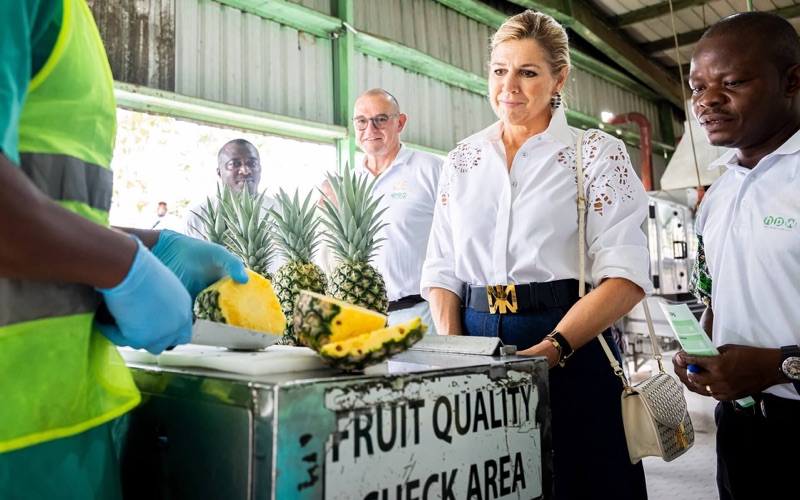
Next came the factory of HPW Fresh & Dry. The company was founded in Switzerland in 1997 and has made dried fruit in Adeiso since 2011, mainly mango, pineapple and coconut. According to the company, it buys fruit from more than 1,600 smallholder farmers.
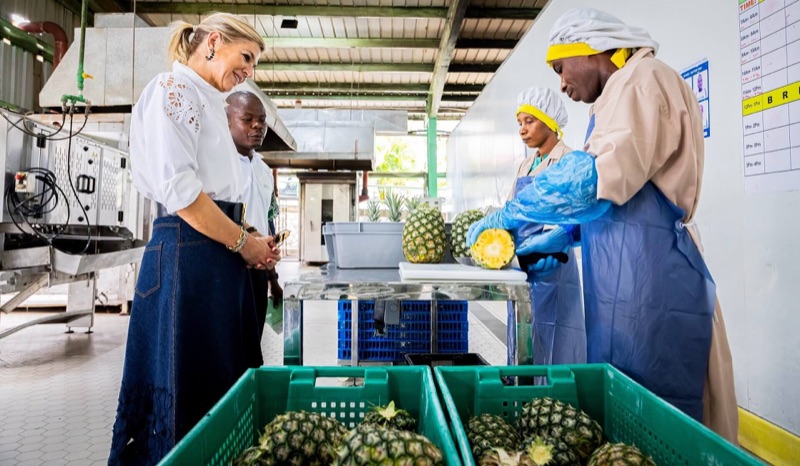
Here the Queen talked with staff and management about what a workplace can do to help people be better off. The Dutch Royal House mentions insurance against crop failure, salary advances, savings and pensions. The farmers also have Fairtrade agreements, which guarantee that their fruit is bought at a fair price, and loans that help them through the parts of the year when they earn little.
Three businesses helping farmers
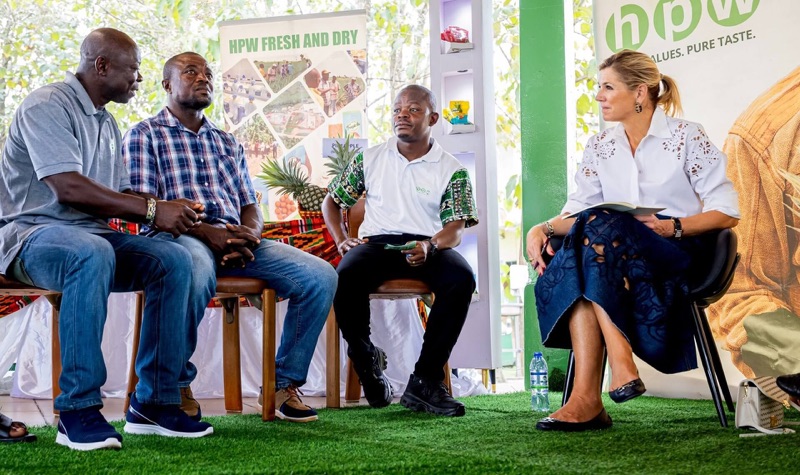
The Queen also met three Ghanaian businesses supported by the organisation IDH, which works to help farmers sell what they grow and get access to credit.
FarmMate helps tomato farmers with seeds, irrigation, insurance and a fixed price, and turns surplus tomatoes into purée. AgroCenta connects grain farmers, particularly in northern Ghana, with buyers and banks. WamiAgro reaches more than 60,000 smallholders through an app offering credit for seeds and fertiliser, training and weather forecasts in local languages.
"Ghana's agricultural opportunity is not only about growing more food; it is about building the markets that allow farmers and businesses to thrive," said Robert Asugre, Country Director of IDH Ghana.
Hospital and market in Accra
Later in the day the Queen was back in Accra. At the Manna Mission clinic she met patients, health workers and doctors, and heard how an app helps people with high blood pressure and diabetes. Doctors can follow patients remotely, which saves both patients and insurers unnecessary costs. The app was developed by the organisation PharmAccess.
At the large Makola market she met women traders who use an app from the company Affinity to save, borrow and take out insurance. The day ended with a meeting with small business owners, who told her about their own finances.
On Wednesday the Queen is due to meet banks and investors in Accra, before travelling to Kumasi to visit the Ashanti King, Otumfuo Osei Tutu II. The visit ends on Thursday with a meeting with President John Mahama.